
Website Analysis and Market Research
Modern websites designed to rank in Google search, appear in AI answers, and generate organic customer traffic.

Website Analysis and Market Research
Most businesses build websites without research. The result. Pages target the wrong searches. Competitors capture the traffic. Customers never find the business.
Why Website Analysis Matters
Businesses often invest in website design without understanding search demand. Design alone does not generate traffic. Search engines rank content based on relevance, structure, and authority.
A detailed website analysis ensures every page targets real searches customers perform online. It reveals missed opportunities competitors ignore and builds a strategy based on measurable data.
This process transforms a website from an online brochure into a customer acquisition system.
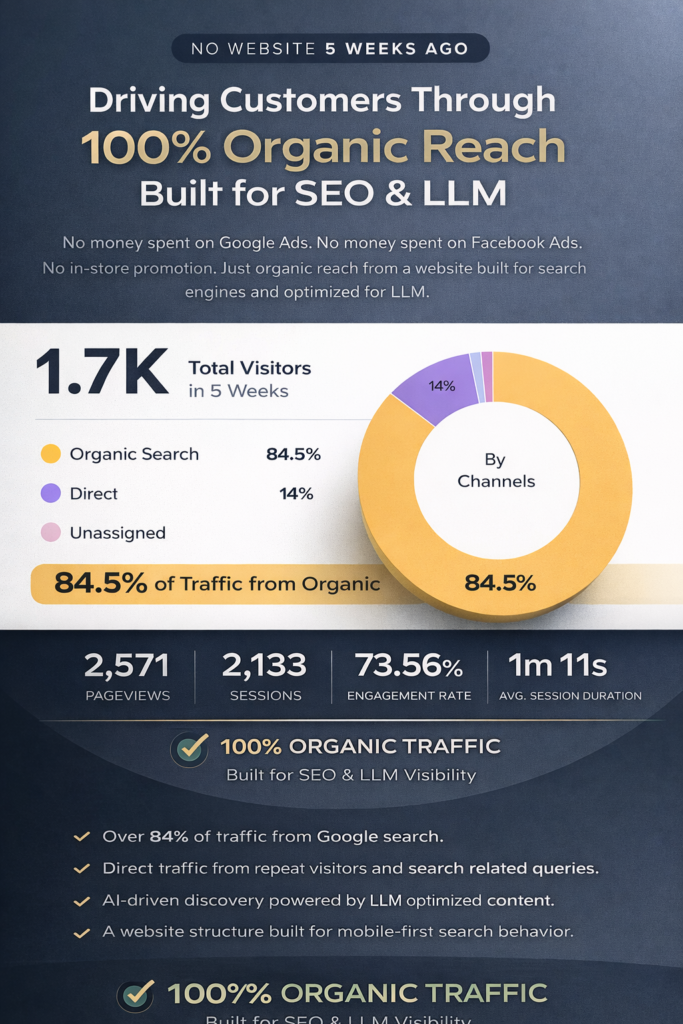
Website Analysis and Market Research identifies how customers search, what competitors rank for, and where opportunities exist in the market. This process builds the foundation for SEO strategy, AI search visibility, and long term organic traffic.
Front Porch Digital Media conducts a full digital audit before building or optimizing a website. The research reveals how search engines and AI systems view a website today and what changes produce growth.
The Analysis Focuses On Four Areas:
Website Performance
Search Visibility
Competitor Positioning.
Market Search Demand
Website Performance Analysis
Site Analysis:
A website audit measures how search engines and AI systems read a website. Technical problems, page structure issues, and missing content prevent websites from ranking.
The Analysis Reviews:
- Page structure and hierarchy
- Mobile performance and page speed
- Internal linking structure
- Heading structure and content organization
- Technical SEO signals
- Indexing status in search engines
- Broken pages and crawl errors
- Schema markup and structured data
- Page load performance and mobile usability
Your This data reveals which pages perform well and which pages require improvement or expansion.
Search Visibility
Search Visibility Analysis:
Search visibility determines whether customers find a website through organic search. Many websites exist online but receive little traffic because search engines do not recognize them as relevant for service searches.
The Analysis Evaluates:
- Current keyword rankings
- Pages receiving organic search traffic
- Pages missing search traffic opportunity
- Search impressions in Google Search Console
- Click through rates from search results
- Content depth compared with ranking competitors
- Local search presence for service areas
Competitor Website Analysis
Competitor Research:
Competitor research shows how other businesses attract traffic. This process identifies which competitors dominate search results and why.:
The Analysis Reviews:
- Top ranking competitors for target services
- Competitor page structure and service pages
- Content depth and topical authority
- Backlink profiles and domain authority
- Local search presence and service area targeting
- Search keywords competitors rank for
- Topics competitors cover across their websites
Competitor analysis identifies the strategies that produce search visibility. The process also exposes weaknesses competitors have not addressed.
Market Search Demand Research
Search Demand:
Customers search for services in specific ways. Search demand research identifies those patterns. Instead of guessing keywords, this research uses real search data.
The Research Identifies:
- High volume service related searches
- Location based searches for local services
- Customer questions related to services
- Long tail search queries with lower competition
- Seasonal search trends
- Emerging searches driven by AI assistants and voice search
Keyword Opportunity and Content Gap Analysis
Many competitors miss valuable search opportunities. Some topics remain uncovered. Some services receive little detailed explanation. These gaps create ranking opportunities.
The Analysis Identifies:
- Keywords competitors rank for
- Keywords competitors overlook
- Service topics missing detailed explanation
- Questions customers ask online without clear answers
- Local search opportunities for service areas
- Supporting content topics that build authority
These insights guide the development of service pages, blog content, and supporting content across the website.
AI Search and LLM Optimization Review
AI Search:
Search behavior continues to evolve. Customers now ask AI tools for recommendations and answers. AI systems pull information from structured websites that clearly explain services and topics.
The Analysis Evaluates
- Content clarity and topic coverage
- Structured content blocks AI systems read easily
- Service explanations AI systems reference
- Question and answer content opportunities
- Entity signals connecting services and topics
- Content structure optimized for AI indexing
Results:
This step prepares the website to appear in AI generated answers and conversational search tools.
Website Strategy and Action Plan
Strategy:
The final step produces a strategy for improving search visibility and organic traffic. Businesses receive a clear roadmap based on the research findings.
The Strategy Includes:
- Recommended service page structure
- Content topics and service page expansions
- Keyword targeting strategy
- Local search targeting for service areas
- Internal linking strategy between pages
- Technical improvements required for search engines
- Content opportunities competitors have missed
Results:
A website built on real search demand and competitive analysis.
What is website analysis and market research?
Website analysis and market research reviews a business website, search demand, and competitor websites. The process identifies search opportunities, technical issues, and content gaps. The goal focuses on improving search visibility and attracting customers through organic traffic.
Why does a website need analysis before SEO work?
SEO work without research targets the wrong searches. Website analysis identifies how customers search, which competitors rank, and what content search engines value. This research creates a strategy based on real search data.
What does a website analysis include?
A full website analysis reviews site structure, technical performance, keyword rankings, competitor websites, search demand, and content gaps. The process identifies issues limiting search visibility and reveals opportunities for growth.
How does competitor research improve SEO?
Competitor research reveals which websites rank for important services. The process studies their content, structure, and keyword targeting. This information shows which strategies produce results and which opportunities competitors miss.
What is keyword opportunity research?
Keyword opportunity research identifies search phrases customers use when looking for services. The research also finds search terms competitors do not target. These opportunities allow a website to rank for valuable searches with less competition.
How does market research help local businesses?
Local market research identifies location based searches customers use when looking for services nearby. This research guides the creation of service pages and location pages designed for local search traffic.
What problems does a website audit identify?
A website audit identifies technical issues, slow page speed, missing content, weak internal linking, poor mobile performance, and indexing problems. These issues reduce search visibility and prevent pages from ranking.
How does website analysis help AI search visibility?
AI systems read structured content from websites when generating answers. Website analysis evaluates content clarity, service explanations, and topic structure. Improving these signals increases the chance a website appears in AI generated responses.
How long does website analysis take?
A professional website analysis usually takes several hours of research and evaluation. The process includes reviewing the website, analyzing competitors, studying search demand, and identifying content opportunities.
What results come from website analysis and market research?
Businesses gain a clear strategy for improving search visibility. The analysis identifies technical improvements, keyword targets, content opportunities, and competitor weaknesses. This information guides the development of service pages designed to generate organic traffic and leads.