Your Websites Website SEO Architecture
Modern websites designed to rank in Google search, appear in AI answers, and generate organic customer traffic.

Website SEO Architecture
Website SEO architecture controls how search engines read and understand a website. Search engines crawl page structure, internal links, headings, and content relationships. A clear structure helps search engines identify which pages represent core services and which pages support them.
Start Building A Search Driven Website:
Front Porch Digital Media designs websites built for search visibility, AI discovery, and long term organic growth.
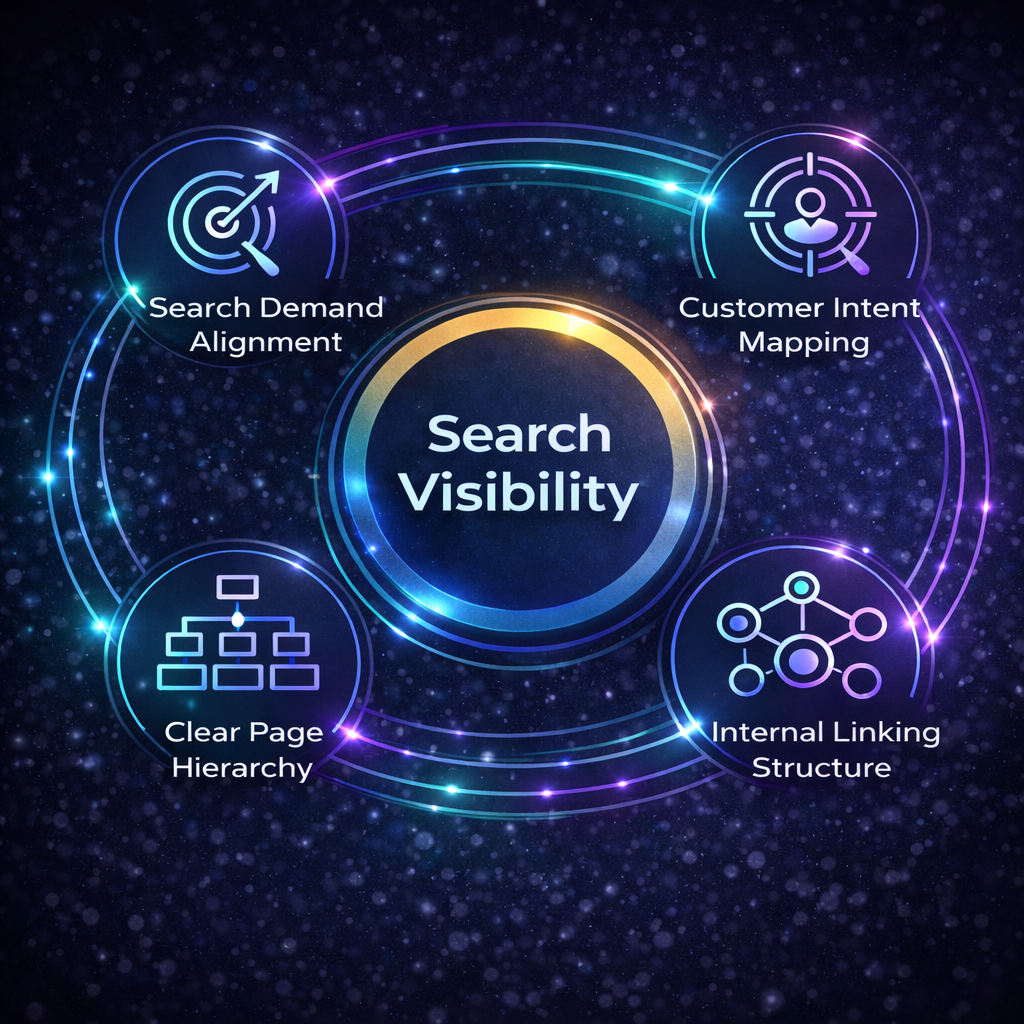
Website architecture determines whether a business website receives traffic or remains invisible online. A structured website aligns every page with search demand and customer intent.
Why Should Businesses Invest In SEO Architecture?
SEO architecture improves search visibility, organic traffic, and customer discovery. A structured website attracts customers through search without ongoing advertising costs.
Why Website SEO Architecture Matters
Many websites fail because pages exist without structure. Service pages compete against each other. Important pages remain buried inside the site. Search engines struggle to understand the website authority and topic focus.
Website SEO architecture solves this problem by organizing the entire website around services, topics, and search demand.
What Website SEO Architecture Means
Connections:
SEO architecture defines how every page connects inside the website. The structure guides search engines from the homepage to service pages, supporting pages, and content designed to answer customer searches.
A structured website creates clear signals about:
- Primary services offered
- Supporting services and related topics
- Geographic service areas
- Content authority for each topic
- Relationships between pages
This structure allows search engines and AI systems to understand what the website represents and which services deserve visibility.
How Search Engines Read Website Structure
Crawling Sites:
Search engines crawl websites by following internal links. Every link helps search engines discover new pages and understand how topics connect.
When architecture is clear:
- Search engines index pages faster
- Important pages receive more authority
- Supporting pages strengthen main service pages
- Search engines understand topic relevance
When architecture is weak:
- Pages remain hidden from search engines
- Search engines misunderstand page intent
- Service pages compete against each other
- Ranking potential drops
Proper website architecture ensures the right pages receive the strongest search signals.
Service Page Hierarchy
Hierarchy:
Service page hierarchy organizes services from broad categories to detailed services. This structure helps search engines understand the relationship between services.
Example structure:
- Primary service page
- Supporting service pages
- Location specific service pages
- Supporting content pages
Each page connects through internal links that guide search engines and visitors through the website.
This structure improves search authority for the primary service while allowing supporting pages to capture additional search traffic.
Content Clusters and Topic Authority
Topic Coverage:
Search engines measure authority based on topic coverage. Websites that explain a service in depth receive stronger ranking signals.
Content Support:
Content clusters support service pages by covering related topics and customer questions.
Examples:
- Service explanation pages
- Customer question pages
- Problem solution pages
- Educational content related to the service
- Local service guides
These pages link back to the main service page and strengthen its authority in search results.
Internal Linking Strategy
Internal linking :
Internal linking distributes authority throughout the website. Every link acts as a signal showing which pages matter most.
A strong internal linking strategy includes:
- Links between related service pages
- Links from blog content to service pages
- Links from location pages to service pages
- Navigation links guiding search engines through the website
- Contextual links inside page content
These links help search engines understand topic relationships and strengthen ranking signals
Why Website Architecture Matters for Business Growth
Clear Structure:
Search engines reward websites with clear structure and strong topical authority. Businesses with organized websites receive more search visibility and more organic traffic.
Website SEO Architecture Produces:
- Faster indexing of new pages
- Stronger authority for service pages
- Higher rankings for competitive searches
- Better visibility in AI search tools
- Improved customer navigation and experience
The website becomes a search driven lead generation system instead of a static online brochure.
Service Page Hierarchy
Crawling and Indexing:
Technical structure ensures search engines crawl and index the website correctly. Technical problems can prevent even strong content from ranking.
SEO Architecture Includes:
- Optimized URL structure
- Clean navigation menus
- Mobile first page structure
- Fast page load performance
- XML sitemap submission
- Schema markup for services and business information
- Search engine indexing configuration
These elements help search engines read and trust the website.
Location Based Page Architecture
Local Service Businesses:
Local service businesses depend on geographic search visibility. Location pages help businesses appear in searches connected to specific cities or service areas.
Location architecture includes:
- City specific service pages
- Location optimized headings and content
- Local search signals connected to service pages
- Internal links connecting locations and services
This structure allows businesses to appear in local searches across multiple cities and regions.
AI and LLM Friendly Website Structure
Search Behavior:
Search behavior continues to evolve through AI search tools. AI systems scan websites to gather structured information about services, businesses, and topics.
SEO Architecture Built For AI Includes
- Clear service definitions
- Structured content sections
- Logical page hierarchy
- Entity signals connecting services and topics
- Question and answer content blocks
This structure increases the chance a website appears in AI generated answers and recommendations.
How Front Porch Digital Media Builds SEO Architecture
Custom Build:
Front Porch Digital Media builds websites with search architecture from the beginning. Each page serves a specific role within the overall structure.
The Process Includes:
- Rervice page hierarchy planning
- Keyword and topic mapping for pages
- Internal linking strategy development
- Location page architecture
- Technical SEO structure
- AI optimized content structure
Results:
The result is a website designed to rank in search engines and appear in AI generated answers.
Website Strategy and Action Plan
Strategy:
The final step produces a strategy for improving search visibility and organic traffic. Businesses receive a clear roadmap based on the research findings.
The Strategy Includes:
- Recommended service page structure
- Content topics and service page expansions
- Keyword targeting strategy
- Local search targeting for service areas
- Internal linking strategy between pages
- Technical improvements required for search engines
- Content opportunities competitors have missed
Results:
A website built on real search demand and competitive analysis.
What is website SEO architecture?
Website SEO architecture defines how pages organize and connect across a website. Search engines read structure, internal links, and headings to understand services and topics. A clear structure improves indexing and search rankings.
Why does website structure matter for SEO?
Search engines rank pages based on relevance and authority. A structured website helps search engines identify the most important pages. Clear hierarchy improves visibility for service pages and important content.
What is a service page hierarchy?
Service page hierarchy organizes services from primary services to detailed supporting services. This structure helps search engines understand which pages represent core services and which pages support them.
What is internal linking in SEO architecture?
Internal linking connects pages inside a website. Links guide search engines from one page to another and show relationships between topics. Strong internal linking improves page authority and search rankings.
How do search engines crawl website structure?
Search engines follow links to discover pages and analyze how content connects. A well structured site allows search engines to crawl pages faster and understand topic relevance across the website.
What are topic clusters in SEO?
Topic clusters include groups of pages covering related subjects around a main service. Supporting pages answer questions and explain details. These pages link back to the main service page to strengthen authority.
Why are location pages important for SEO?
Location pages help businesses appear in searches connected to cities or service areas. These pages include local keywords, service information, and internal links to service pages.
How does SEO architecture improve user experience?
Clear website structure helps visitors find information quickly. Organized navigation and logical page flow guide visitors through services and information without confusion.
How does website structure impact AI search tools?
AI search systems read structured content to gather information about services and topics. Clear page organization and structured content increase the chance a website appears in AI generated answers.
What results come from strong website SEO architecture?
Businesses gain improved search visibility, stronger rankings for service pages, faster search engine indexing, and more organic traffic from customers searching for services online.